This is one of the great questions of Christian doctrine – and, indeed, of human life itself. In the lectionary Gospel reading for this coming Sunday, we spend our third and final week in Matthew 13, the primary location in the New Testament for Jesus’ parables of the Kingdom. Of all Jesus’ teachings, the Kingdom is paramount – but, yes, it does always seem to be essentially ambiguous: is it a way of personal and social liberation now, or of judgment in the future?
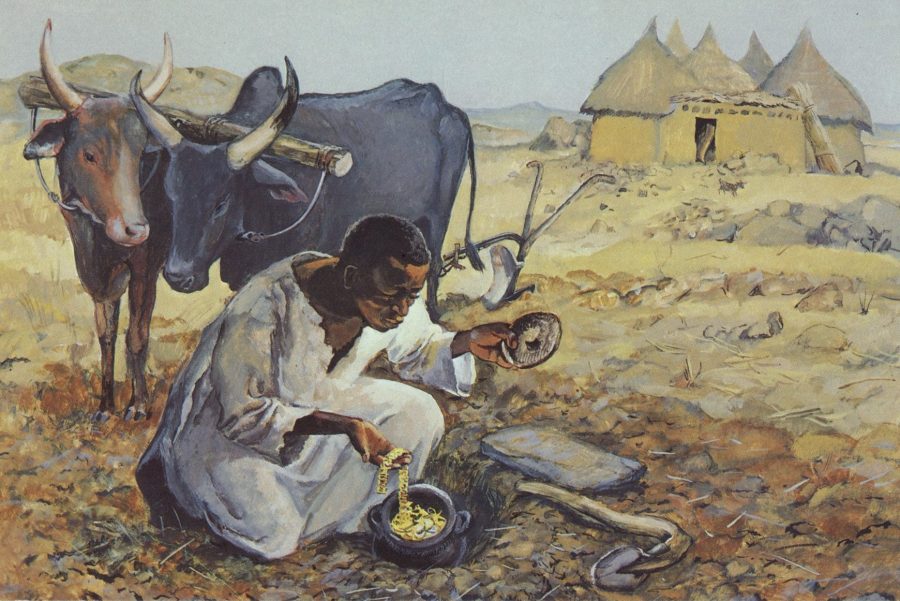
It could be both, of course; and theologians and teachers since the time of Jesus have made it their business to attempt to reconcile the two. In Sunday’s reading we have five Kingdom parables in quick succession: the tiny mustard seed growing into a large tree, a few small grams of yeast leavening whole loaves of bread, the discovery of treasure hidden in a field, a merchant finding a pearl of great value, a great catch of fish in a net cast into the sea – all of which speak of liberation, of being set free from our old self-centred ways and breaking through to the new, richer, more abundant life, living for and serving others, that God offers us through Jesus, now through the Holy Spirit.
But then the final of the five mini parables turns suddenly to chilling judgement:
“So it will be at the end of the age. The angels will come out and separate the evil from the righteous and throw them into the furnace of fire, where there will be weeping and gnashing of teeth.” [13: 49-50]
Yes, I know that Jesus must somehow be both liberator and judge, but the truth is that the terrible judgement of the world that Jesus is recorded as pronouncing at key points in the Gospels is, for so many people, a complete turn-off – whatever you think about it, it is, with certainty, one of the key things that have turned people away from the church and from any belief in Jesus or God in droves in the modern era.
I have my own views on the matter (which are bound to be controversial!), but I wonder what you think about it? Feel free to let me know. How, indeed, can we reconcile what appear to be two very different Jesuses: a kind, loving one who heals the sick and proclaims God’s coming reign of selflessness and love; and an angry, self-righteous one who threatens terrible judgement and eternal punishment? – in a way, especially, that could seem plausible and convincing for those folks we all know who have long since turned their backs on both (Jesuses)?
Uniting Church in SA eNews Reflection 21/7/26
Featured image: The Hidden Treasure, Jesus Mafa, Cameroun, 1973. Vanderbilt University Divinity Library.